Lucky Classic Tripeaks Game
JOYWIN GAMECard
4.6394.00 Reviews
- Version
- 0.2.3
- Installs
- 100.00K
- Age Rating
- Mature 17+
Screenshots

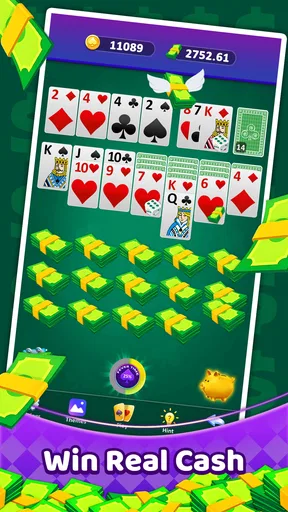
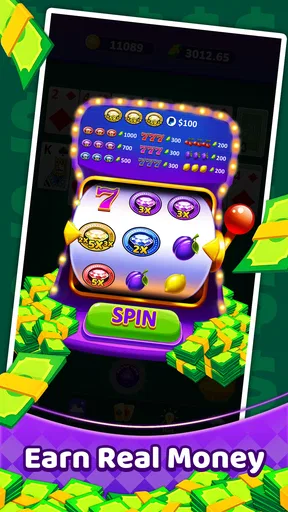
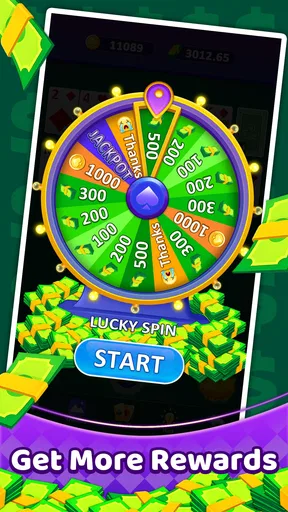
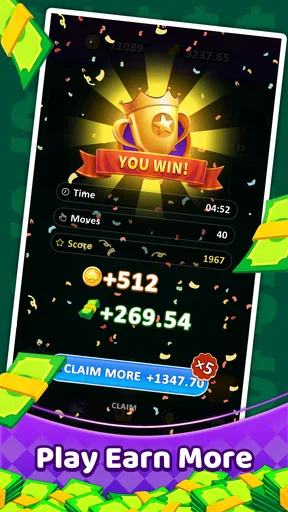
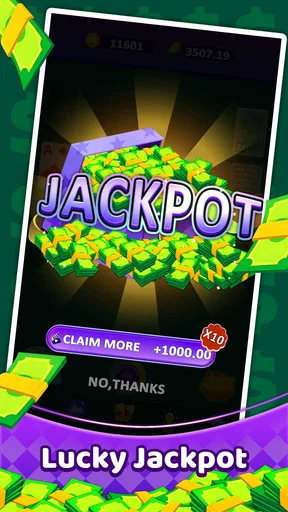
Our Review of Lucky Classic Tripeaks Game
 Analysis by Appyee
I tried Lucky Classic Tripeaks as a quick card game rather than treating it like a long campaign, and that is the right way to understand its appeal. It takes the familiar Tripeaks solitaire format and places it in a more reward-focused setting, so each short session has a little more tension than a purely casual card app. The basic idea is easy to grasp, but the promise of real-money rewards also changes how carefully I approach every decision.
This is a free card game from JOYWIN GAME, rated 4.6 from around 3.1 thousand ratings and supported by over 100 thousand installs. It is marked for mature players aged 17 and over. Those details matter because this is not simply a quiet solitaire toy for every member of the family. The reward angle deserves more attention than it would in a standard offline-style card game.
Why the first week feels more engaging than ordinary solitaire
Tripeaks works because the rules are immediately readable. You remove cards from the layout by choosing one rank above or below the current card, and the three peaks give the board a clear visual goal. I did not need a long tutorial to understand what I was doing, which makes the game suitable for a spare minute while waiting for an appointment or taking a short break.
The first sessions benefit from the familiar rhythm. I could scan the exposed cards, decide whether to use a safe move or open another part of the layout, and quickly see whether the board was improving. That sense of progress arrives faster than in many larger card games, where menus, upgrades, and multiple modes delay the actual play.
The real-cash positioning gives otherwise ordinary choices more weight. In a conventional solitaire app, wasting a useful card can be mildly annoying. Here, the possibility of rewards makes me slow down and examine the board before tapping. That can make the game feel more involving, although it also means I would not recommend playing carelessly or while distracted.
My most useful early habit was to avoid clearing an obvious card immediately. I first looked at which exposed cards could create a longer chain and which move would leave me with more flexibility. In Tripeaks, the best move is not always the card that is easiest to remove. Preserving a choice for the next turn can matter more than making the board look cleaner right away.
What makes the format approachable
The short-card-session design is the strongest reason to try it. I do not need to remember a story, manage a collection, or learn a complicated control scheme. The game is built around observation and timing, so it fits naturally into small gaps in the day.
It also works for players who already know classic solitaire but want a different layout. Klondike usually asks me to build foundation piles by suit, while Tripeaks focuses more on sequences and opening the covered cards. That creates a more immediate puzzle. I spend less time sorting cards into formal piles and more time planning how one removal can expose the next useful option.
At the same time, people looking for a completely relaxing experience should think about the reward framing. The game may look like a familiar casual pastime, but the mature rating and real-money language signal that it should be approached with adult judgment. I would treat any reward as an uncertain possibility rather than as a reason to play longer or spend more attention than intended.
Small decisions that improve early play
One practical technique is to count available follow-up moves before committing to a long run. If I have several cards that could be removed now, I prefer the one that exposes a hidden card or preserves more rank options. This is more reliable than simply chasing the longest visible streak.
Another useful approach is to delay using a flexible card when the board has several peaks still covered. Opening a new area can reveal a better continuation, but it can also consume the only card that would have connected two sections. I found that alternating between clearing and preserving options keeps the board from becoming unexpectedly rigid.
I also recommend setting a session boundary before starting. Because the rounds are compact, it is easy to tell myself that I will play just once more. That is harmless in a normal puzzle, but the reward-oriented presentation can make repeated attempts feel more urgent. A fixed stopping point keeps the game in the role of a short break rather than allowing it to take over the break.
Whether it retains value after the novelty fades
The first-week question is whether the basic Tripeaks loop is enjoyable enough without needing constant novelty. For me, the answer is partly yes. The rules are simple, but the order of exposed cards changes the decisions, and a board can move from promising to difficult in a few turns. That gives the format some replay value even when the presentation remains familiar.
However, the game’s long-term appeal depends heavily on how much variety and reward activity a player expects. Someone who enjoys repeating compact card puzzles may find a comfortable routine here. Someone who needs a steady stream of new modes, visual changes, or deeper progression may feel the limits sooner. I would not choose it as my main game if I wanted a large system to explore over many months.
The reward concept can extend interest, but it should not be confused with durable gameplay depth. A cash-oriented goal may make another round feel meaningful, yet it does not automatically make the underlying puzzle more varied. Once I understood the best general habits, the lasting question became whether I still enjoyed evaluating the cards rather than whether the reward language was enough to keep me tapping.
Compared with a traditional solitaire app, this game is more compelling when I want a focused challenge with extra stakes. Compared with a broad collection of card games, it is narrower and easier to enter, but it offers less variety from one type of play to another. A player who switches between Spider, FreeCell, Klondike, and other formats may get more long-term freshness elsewhere.
A realistic everyday routine
Imagine having ten minutes before a train arrives. This is the kind of situation where the game makes sense: I can begin quickly, concentrate on one board, and stop without needing to remember a complex objective. If the session involves rewards, I would use that time only when I am alert enough to read the rules and make deliberate choices, not when I am rushing or multitasking.
For a daily habit, I would keep the routine simple. Play a limited number of rounds, note whether the decisions still feel interesting, and stop when I begin tapping automatically. That last point is important. Once I stop examining the layout and start playing from momentum, the puzzle value has dropped, while the temptation to continue can remain.
The game is also better suited to short, intentional sessions than to background entertainment. It does not provide the same passive comfort as listening to music or playing a completely consequence-free puzzle. The more seriously I take the reward possibility, the more carefully I need to separate entertainment from financial expectation.
How much upkeep the game demands
From a player’s perspective, the maintenance burden is relatively light because the core activity is straightforward. I do not have to learn a complicated deck-building system or manage a large inventory. The current version is 0.2.3, and the minimum operating system requirement is Android 9, so compatibility is worth checking before installing on an older device.
The bigger maintenance issue is personal rather than technical: keeping expectations realistic. A reward-focused card game can encourage players to monitor outcomes, repeat attempts, and spend more time than they planned. I would not build a budget around it, and I would read any in-game conditions carefully before treating a reward as usable money.
That distinction separates this title from ordinary free solitaire. With a standard app, maintenance usually means keeping the application installed and occasionally returning to it. Here, maintenance also means maintaining boundaries: deciding how often to play, refusing to chase an unlucky result, and remembering that a free download does not make every in-game decision risk-free.
I would also avoid judging the game solely by its average rating. A 4.6 average is encouraging, and the roughly 394 written reviews show that players have taken the time to comment, but ratings cannot tell me whether the reward model fits my own habits. The right question is not simply whether other people enjoy it; it is whether I can use it without allowing the reward angle to dictate my routine.
Where fatigue begins
The main source of fatigue is repetition. Tripeaks is elegant because it is simple, but that same simplicity can become predictable when I play too many rounds in one sitting. The layout changes the immediate puzzle, yet the basic action remains the same: inspect the available ranks, remove cards, and try to uncover the peaks.
A second source is emotional rather than mechanical. When a board feels close to completion, I may become more invested in the next move than I would in a normal solitaire game. If the result does not go my way, the natural response is to try again. That loop can be enjoyable in moderation, but it becomes tiring when every loss feels like an invitation to recover what I missed.
The game is not the right choice for someone who wants guaranteed progress. A Tripeaks board can leave me with limited options despite careful play, and no strategy removes all uncertainty from card order. Players who dislike chance, reward pressure, or repeated short attempts will probably be happier with a classic solitaire app that keeps the stakes purely recreational.
It may also disappoint users seeking a social card experience. The appeal here is the individual puzzle and its reward context, not the atmosphere of a live table with conversation, bluffing, or direct competition. If I want strategic interaction with other people, a multiplayer card title would be the better direction.
When another card game is a better fit
I would choose Klondike when I want a slower, more traditional solitaire structure and a familiar foundation-building objective. I would choose FreeCell when I want more control and a puzzle that rewards deliberate planning with fewer surprises. I would choose Spider when I want a more demanding sorting challenge involving multiple suits.
Lucky Classic Tripeaks makes more sense when I want the board to reveal itself quickly and prefer a chain-based puzzle over formal foundation piles. Its advantage is immediacy, not breadth. The reward framing may add motivation for some adults, but it is not a substitute for the deeper strategic variety found in other solitaire formats.
There is also a practical reason to choose a non-reward alternative: peace of mind. If I am trying to reduce screen time or avoid games that make me feel compelled to repeat a result, a plain solitaire app is easier to keep in its proper place. This title is best for a player who can enjoy the possibility of rewards without making them the center of the experience.
My long-term verdict
After the initial novelty, I think the game earns a place as an occasional short-session card game, not automatically as a permanent daily habit. Its Tripeaks format is accessible, quick to understand, and more engaging than a completely passive card pastime. The reward-oriented design gives ordinary decisions additional tension, which is its clearest point of difference.
That difference is also the reason I would use it selectively. The mature age rating is appropriate for a game presented around real-money rewards, and adults should approach it with clear limits. I would never treat a winning possibility as income, and I would stop playing if the reward goal began to matter more than the puzzle itself.
For someone who wants a free, compact card game and already enjoys solitaire, this is worth trying. The developer, JOYWIN GAME, has kept the central idea easy to access, and the game’s current audience of over 100 thousand installs suggests that the format has found interested players. Still, popularity does not remove the need to decide whether its reward emphasis matches your habits.
My recommendation is conditional but positive: install it if you want quick Tripeaks rounds, can play with a firm time limit, and understand that rewards should never be treated as guaranteed money. Skip it if you want a completely consequence-free solitaire experience, broad card-game variety, or a deeper long-term progression system.
In the end, the lasting value comes from the card decisions, not from the promise attached to them. When I focus on reading the layout, preserving options, and ending a session at the planned time, the game works well as a compact mental break. When I start chasing outcomes or playing automatically, its appeal fades quickly. That makes it a useful occasional companion, but not a game I would recommend allowing to fill every spare moment.
Verdict
Strengths of Lucky Classic Tripeaks Game
- Simple rules make it easy for beginners to start playing.
- Short rounds are convenient for quick breaks or casual sessions.
- Tripeaks layouts add variety beyond standard solitaire games.
- Smooth touch controls make card movement feel responsive.
- Offline play is useful when you have no internet connection.
Limitations of Lucky Classic Tripeaks Game
- Frequent ads may interrupt the game between rounds.
- Progress can feel repetitive after extended play sessions.
- Some features may require in-app purchases to unlock.
- Random card deals can occasionally make levels feel luck-based.
- The interface may feel dated compared with newer solitaire apps.
Similar Picks in This Category
View All
Solitaire - Classic Card Games
MobilityWare4.6

UNO!™
Mattel163 Limited4.3

Spider Solitaire: Card Games
MobilityWare4.6

Solitaire.com - Classic Cards
Tripledot Studios Limited4.7

Plants vs. Zombies™ Heroes
ELECTRONIC ARTS4.1

Hearthstone
Blizzard Entertainment, Inc.4.1
Frequently Asked Questions
What is Lucky Classic Tripeaks Game?
Lucky Classic Tripeaks Game is a mobile solitaire card game based on the popular TriPeaks format. You clear cards from three peaks by playing cards that are one rank higher or lower than the card in the discard pile. The app generally combines classic solitaire rules with colorful visuals, level progression, daily challenges, and casual rewards designed for short gaming sessions.
How do you play Lucky Classic Tripeaks Game?
The main objective is to remove all cards from the three peaks before the draw pile runs out. You can select a face-up card that is immediately higher or lower than the current discard card, regardless of its suit. When no suitable move is available, draw another card. Careful planning is important because saving useful sequences and wild cards can help you complete difficult levels.
Is Lucky Classic Tripeaks Game free to download and play?
Lucky Classic Tripeaks Game is typically free to download, allowing users to start playing without purchasing the application. However, free-to-play versions may include optional in-app purchases for coins, boosters, extra moves, or other advantages. Advertising may also appear between rounds or during reward collection. Check the store listing and purchase settings before downloading, especially if children use the device.
Can Lucky Classic Tripeaks Game be played offline?
Basic solitaire levels may be available without a continuous internet connection, which makes the game convenient for travel or areas with limited connectivity. Nevertheless, features such as advertisements, cloud synchronization, leaderboards, daily events, account rewards, and in-app purchases may require internet access. Availability can differ by version and device, so it is best to open the game online at least once after installation.
Is Lucky Classic Tripeaks Game suitable for beginners and children?
The game is generally easy for beginners because its rules are simple to understand and the interface usually highlights playable cards. It can be suitable for older children and casual players, although parents should review advertising, privacy permissions, and optional purchases before allowing unsupervised use. Since some levels depend on card distribution and boosters, younger players may also need guidance about spending virtual or real money.
Play our best games!


